
Sabrina Leidelmeijer · hypnobirthing teacher and doula at PUUR Zwanger
Matrescence: there's a word for what's happening to you
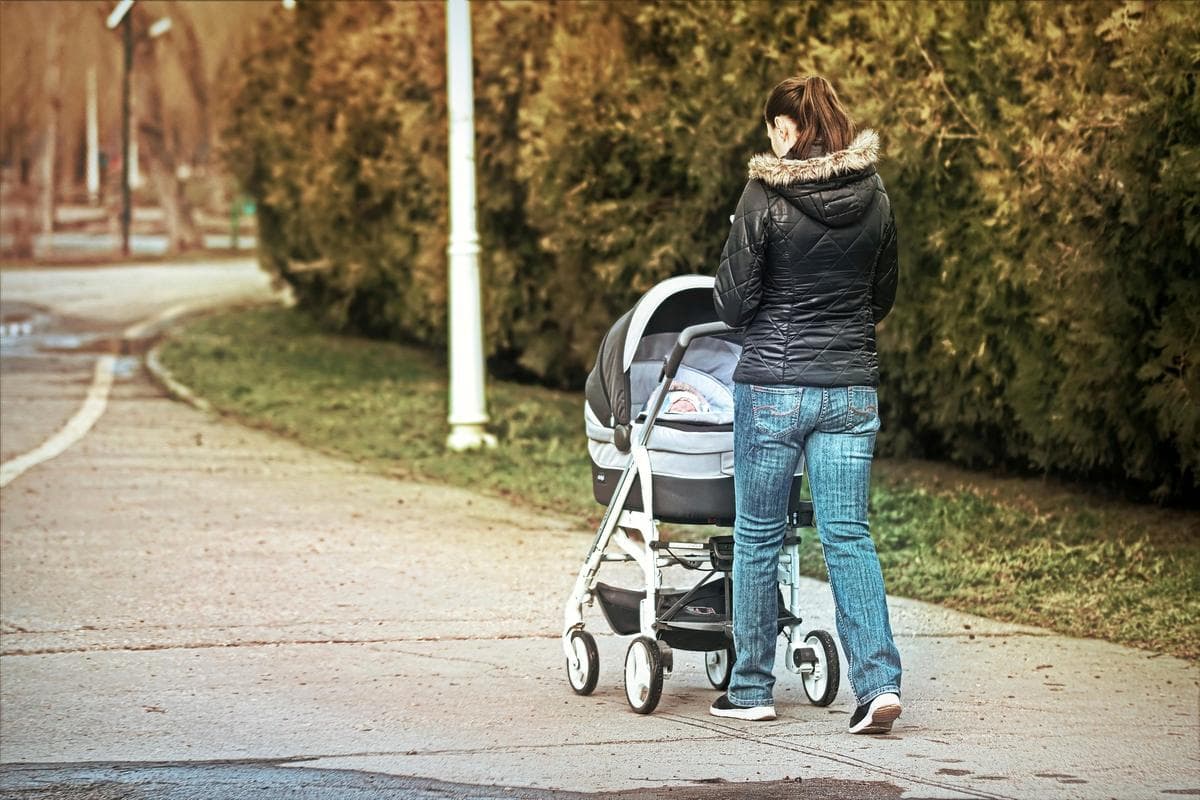
Your baby is six weeks old. The postpartum nurse left long ago, the flowers have been cleared away, visitors come less often. Everyone asks how your little one is doing, and you talk about the feeds and the sleeping and how fast your little one is growing. You usually leave out that you look at yourself in the mirror in the morning and think: who are you, actually.
There is a word for that experience. Matrescence.
Where the word comes from
The term was coined in the nineteen-seventies by the anthropologist Dana Raphael. She studied how women become mothers in different cultures and noticed something striking. In many non-Western societies a woman is surrounded for weeks to months after the birth with care, rituals and shared knowledge. In the West the attention sits mainly on the medical care around the birth, and after that it goes quiet.
Decades later the clinical psychologist Aurélie Athan of Columbia University picked the term up again and brought it back into the scientific conversation. She describes matrescence as a healthy developmental phase, comparable to adolescence, only without language, without recognition and without guidance.
That is exactly where it pinches. For a teenager we have endless understanding. We know that it chafes, that it is hormonal, that it belongs. For a woman who has just become a mother we mainly have questions about the baby.
What changes
Matrescence describes the transition from woman to mother, and that transition touches nearly everything at once. Your body, your hormones, your sleep, your relationship, your friendships, your work, your place in a conversation, your view of the world.
Your brain changes too. The science journalist Lucy Jones describes in her book Matrescence how far-reaching that rearrangement is. Some of those changes are still visible up to six years after the birth. So you are not a temporarily unbalanced version of yourself who will spring back. You are becoming someone.
The big difference with adolescence is the timing. A teenager has years and does not have to care for anyone in the meantime. You go through this transformation while feeding every three hours, barely sleeping, and carrying full responsibility for a human being who has only just started.
Why you hear so little about it
In the Netherlands care around birth is well arranged. Your midwife knows you, the postpartum nurse comes to your home, everything is covered. Only that postpartum care stops after about eight days. Exactly at the moment the real work begins, the support falls away.
After that, what remains is the care aimed at what can measurably go wrong. Around eleven per cent of women experience depression around pregnancy or afterwards, and there is rightly attention for that. Underneath sits a much larger group who have no diagnosis and still have something to carry. About one in five mothers in the Netherlands looks back on her birth with a negative feeling. For one in ten it was outright traumatic.
That first group falls between two stools. Too mild for the GP, too heavy to keep chewing on alone.
PUUR Gedragen
You do not have to do this alone
Fifty years ago Dana Raphael saw something that still holds. Women who go through this phase together carry it more lightly. That is why PUUR Zwanger and MIKA started the PUUR Gedragen circle: every two weeks a Wednesday morning from 10.00 to 11.30 at MIKA yoga & coffee in Bilthoven, where you walk in with your baby, get a coffee and say what there is to say. Each time one of the six themes below, with a short body-based exercise and all the room to share. Your baby is always welcome, the group is no more than ten women, and you can join at any point because the themes stand on their own.
Wednesday 10.00–11.30 · MIKA in Bilthoven, close to Utrecht · drop-in circle € 35, the series of six € 175
Sign up for the circle →The six themes of the PUUR Gedragen circle
Below, each theme is set out, with the sentences you may recognise in yourself and a question to sit with for a moment.
Theme 1
Your birth story
By now you have told the story often. To your mother, to your colleagues, to the woman next to you at the baby clinic. Usually the short version, with a cheerful ending, because your baby is here and it went well.
The long version you rarely tell. That one is about the moment you lost your grip. About the sentence someone said to you that stayed. About the gap between what you had pictured and what it became. A birth story becomes lighter once you are allowed to tell it in full to people who offer no reassurance and hold no judgement.
What part of your story do you usually leave out?
Wednesday 7 October 2026Sign up for this circle →Theme 2
Your body
Your body has done something extraordinary and feels strange at the same time. The scars, the softness, the breasts that now mainly have a function. You may catch yourself looking sternly, while you have just asked more of that body than you have ever asked of anything.
There is something subtler going on too. Research into anxiety after birth has recently focused explicitly on the disrupted connection with your own bodily signals. You feel hunger, tension or tiredness less sharply, because your attention lies permanently with someone else. Learning to feel again what happens in your body is therefore one of the most concrete things you can do.
Where in your body have you been these past weeks, and where not at all?
Wednesday 21 October 2026Sign up for this circle →Theme 3
The nights
Sleep deprivation is not an inconvenience. It changes how you think, how you react, how you see yourself. At four in the morning your thoughts are darker than at four in the afternoon, and that is physiology rather than character.
The nights often hold the loneliness too. The rest of the house is asleep, the street is quiet, and you are awake with a child seeking comfort. It helps to hear that in the same city dozens of women are doing exactly the same at that moment.
What gets you through a night?
Wednesday 4 November 2026Sign up for this circle →Theme 4
Your relationship
You were two people and now you are an organisation. The conversations are about feeds, groceries and who gets up tonight. Meanwhile the tally of who carries what quietly mounts up, and that tally is rarely discussed out loud.
What often plays a part: the two of you go through the same period very differently. Your transformation sits in your body, theirs takes place outside it. Both are real, and they are out of step. Asking after the need underneath the irritation gets you further than the conversation about dividing tasks.
What would you want your partner to know about you, without having to explain it?
Wednesday 18 November 2026Sign up for this circle →Theme 5
Who you are now
You are someone who had work, opinions, friends, plans for the summer. That is all still there, and it is on a lower flame than you were used to. At the same time something has come in that you have no words for yet.
Guilt often sits here. You miss your old life and you love your child intensely, and those two seem to contradict each other. They simply exist side by side. Being able to say that out loud without anyone flinching is, for many women, the moment it becomes lighter.
What of yourself do you want to carry into who you are becoming?
Wednesday 2 December 2026Sign up for this circle →Theme 6
What you take with you
Matrescence is a phase rather than an end point. At some moment you notice that you can laugh at something silly again, that you slept through a whole night, that you are having a conversation about nothing in particular.
What stays is what you learned along the way. About your limits, about who truly showed up for you, about how much you can carry. Naming that harvest turns a heavy year into something you can look back on with more than relief alone.
What do you know about yourself now that you did not know a year ago?
Wednesday 16 December 2026Sign up for this circle →If you come across something that needs more than this, I am glad to think along with you about where to turn. And beyond that: you are in the middle of a developmental phase that has a name, that is universal, and that belongs to what you are going through.
Sources and further reading
Raphael, D. (1973). The Tender Gift: Breastfeeding. The anthropologist who coined the term matrescence, from research into becoming a mother in different cultures. matrescence.com →
Athan, A. (2024). Matrescence as a Theoretical Space for Renewal. Studies in Gender and Sexuality, 21(3). Athan brought the term back into the scientific conversation and describes matrescence as a healthy developmental phase. doi.org →
Jones, L. (2023). Matrescence: On the Metamorphosis of Pregnancy, Childbirth and Motherhood. On the changes in body and brain during pregnancy, birth and motherhood. nieuwezijds.nl →
Trimbos Institute. Depression prevention for pregnant and newly delivered mothers, with a toolkit for professionals in maternity care. In Dutch. trimbos.nl →
Wang, Z., Liu, J., Shuai, H. et al. (2021). Mapping global prevalence of depression among postpartum women. Translational Psychiatry, 11(1), 543. The source behind the figure of almost eleven per cent. doi.org →
Babiy, Z., Frey, B.N., McCabe, R.E., Bieling, P.J., Minuzzi, L., Puccinelli, C. & Green, S.M. (2026). Mindfulness-Based Intervention for Treatment of Anxiety Disorders During the Postpartum Period. Brain Sciences, 16(1), 88. A study protocol on anxiety after birth, focused on bodily awareness. doi.org →