
Sabrina Leidelmeijer · hypnobirthing teacher and doula at PUUR Zwanger
Parents of very premature babies carry it for a long time
Amsterdam UMC, Erasmus MC and UMC Utrecht followed 446 babies born before 29 weeks. The parents of 217 families filled in questionnaires. Around the due date, over a third of mothers and almost one in six fathers had symptoms consistent with PTSD. The researchers argue for psychological care as a standard part of neonatal intensive care.
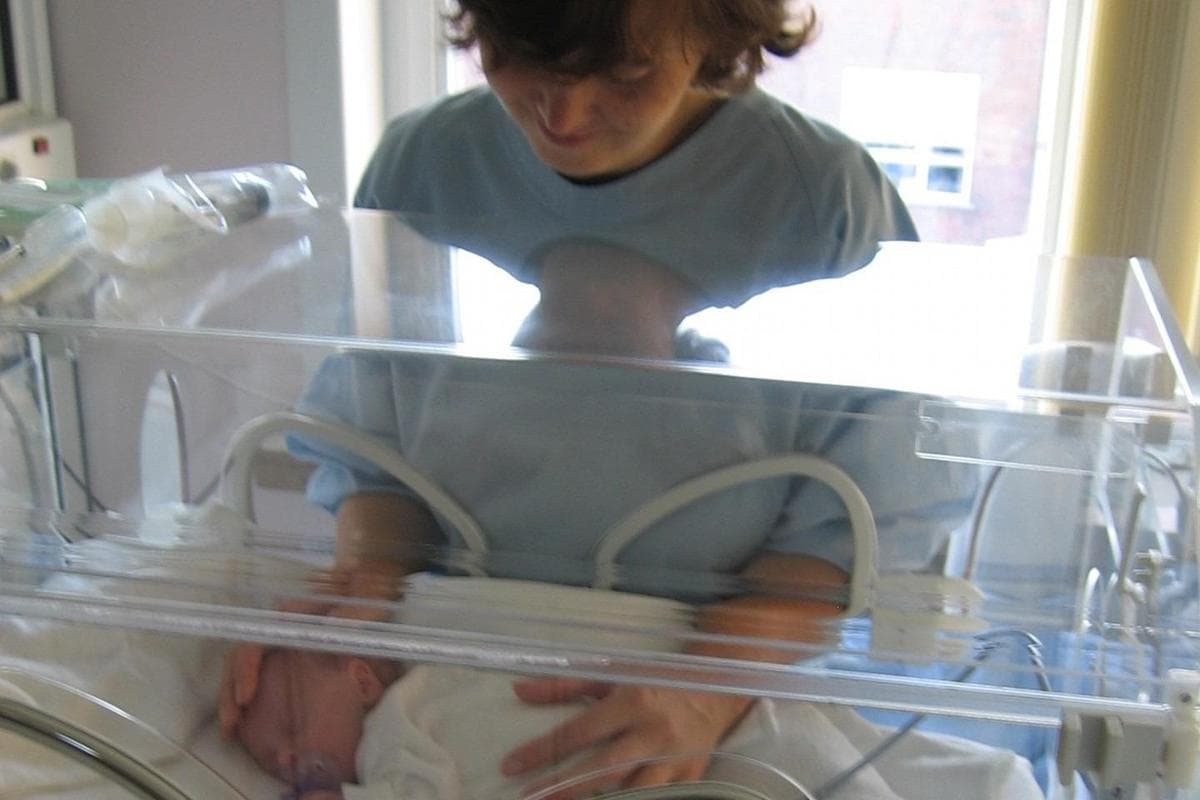
You are standing next to an incubator. Your hands go in through two round openings. There are tubes, something is beeping, someone comes by and does something you do not understand at all. And there you stand, with your child an arm's length away.
For the first time, large-scale research in the Netherlands has looked at what that period does to parents. The outcome appeared in August 2026 in the journal Pediatrics, and it is substantial.
What the research found
Amsterdam UMC, Erasmus MC and UMC Utrecht followed 446 babies born before 29 weeks of pregnancy. The parents of 217 families filled in a questionnaire three times about how they were doing mentally: shortly after the birth, a month later, and around the date their child was originally due. All Dutch neonatal intensive care units took part.
Around the due date, over a third of mothers and almost one in six fathers had symptoms consistent with post-traumatic stress disorder. In the first weeks almost forty per cent of mothers were clearly low in mood, and about twenty per cent of fathers.
One thing in those figures struck me the most. The low mood eased later on, while the stress symptoms stayed high. So they do not fade with time.
Kirsten Muller, psychologist and researcher at Amsterdam UMC and Erasmus MC, mentions reliving and flashbacks, nightmares and moods that turn. Avoidance occurs too: some parents find it daunting to walk into a hospital again.
Professor Lotte Haverman of the Emma Children's Hospital sums up the cause in one word: powerlessness. Parents look on while far-reaching things happen to their newborn child, and in that moment there is little for them to do.
Who is more at risk
The researchers also saw who runs a higher risk. Parents who were already more vulnerable, through difficult events in their past, through earlier psychological help, or through a lot of tension during pregnancy. And stress during the admission itself plays a part. Most parents do well, they emphasise. And the group left with symptoms is large enough to do something about.
Anyone who has been through a premature birth knows how hard it is. Since this research it is in figures as well. And the researchers draw a conclusion straight away: psychological support for parents should become a standard part of care around a premature birth. As a matter of course, instead of an extra for those who dare to ask.
They give a reason for that which goes further than the wellbeing of the parents themselves. Symptoms that linger also affect the child's development. So helping parents is helping the family.
If you have been through this, then this may above all be a piece of recognition. That you still startle at a beep. That those first weeks are lost to you. That your partner sits with it differently than you do, and that the two of you find it hard to talk about. That belongs to what you have been through, and you are not alone in this.
One of the researchers puts it this way: good preparation can help parents to cope better, and whether it prevents symptoms is still unknown. And once you have been able to tell your story in full, it becomes lighter to carry.
Where to turn
The hospital where your child stayed almost always has its own psychologist or social worker attached to the ward. You may still ask for them months later. Your GP is a good first step and can refer you to a specialist clinic for psychological complaints around pregnancy and birth. Since 2019 there has been a Dutch guideline for birth-related PTSD, so your care provider can fall back on it.
Frequently asked questions
Can fathers develop PTSD symptoms after a premature birth too?
Yes. In this study almost one in six fathers had symptoms consistent with PTSD around the due date. Among mothers it was over a third. Fathers come forward less often, while the symptoms linger just as much.
How long after the NICU stay can you still ask for help?
There is no time limit. The research showed that stress symptoms stay high while low mood eases, so they do not fade by themselves. The hospital where your child stayed almost always has a psychologist or social worker attached to the ward, months later too.
Where can I find other parents who have been through this?
At Care4Neo, the association for parents of children born too early, too small or ill. They took part in this research and offer buddies, contact with other parents and an online drop-in on the second Thursday of every month.
PUUR Gedragen
Your birth story, told in full for once
In the mothers' circle at MIKA in Bilthoven the first morning is for your birth story. The long version, to women who offer no reassurance and hold no judgement. Your little one is always welcome.
Wednesday 10.00–11.30 · MIKA in Bilthoven, close to Utrecht · drop-in circle € 35
See the mothers' circle →Sources and where to turn
Muller, K.S., van Oers, H.A., Meesters, N.J. et al. on behalf of the HIPPO study group (2026). Parent Mental Health From Preterm Birth Through the NICU Stay. Pediatrics, e2026076477. The national study by Amsterdam UMC, Erasmus MC, UMC Utrecht, Neonatology Network Netherlands and Care4Neo, published on 17 August 2026. doi.org →
Amsterdam UMC (18 August 2026). Many parents of very premature babies keep severe stress symptoms. In Dutch. amsterdamumc.org →
NOS (18 August 2026). Many parents suffer PTSD symptoms after a premature birth. With the quotes from Kirsten Muller and Lotte Haverman. In Dutch. nos.nl →
Reformatorisch Dagblad (18 August 2026). Extremely premature birth can lead to PTSD in parents. Interview with Kirsten Muller. In Dutch. rd.nl →
NVOG and others (2019). Guideline on birth-related PTSD and PTSD symptoms. In Dutch. richtlijnendatabase.nl →
Care4Neo, the parent and patient association for parents of children born too early, too small or ill. They took part in this research and organise contact with other parents, buddies and an online drop-in on the second Thursday of every month. care4neo.nl →